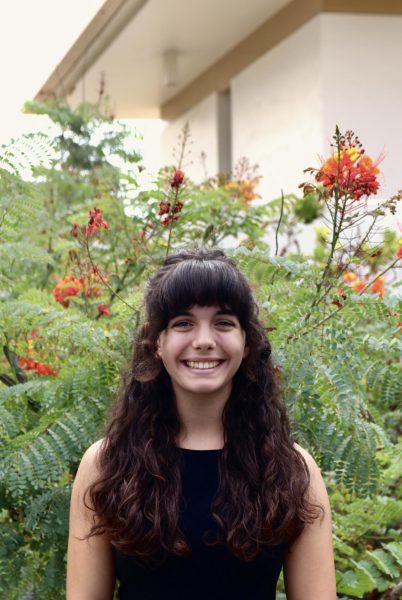
Biola University offers an array of foreign languages to satisfy general education requirements, including biblical languages such as Hebrew and Greek. Latin, however, is notably absent. For Tyler Jones, a current junior Health Sciences major, this omission stood out. Motivated by a desire to grow closer to God and connect with Church history, Jones began advocating in November 2024 for the university to include Latin as a foreign language option.
“I was really inspired by how much of Christian history there is in this language,” he said. “It’s also more personal for me too, as someone who joined the Catholic church a few years ago. It’s a very personal way of praying certain prayers, certain times of the liturgical year you go to Mass and certain parts of the mass are in Latin, or certain hymns are in Latin.”
Jones tried to learn the language on his own, but found it difficult without any formal guidance.
“I wanted something more substantial so I could actually learn it myself … that’s what prompted me to start looking around Biola to see if that had been done before here.”
Jones discovered that while there were no undergraduate Latin classes offered at Biola, Torrey students had been allowed to attend graduate level Latin classes at Biola in the past. Being a Torrey student himself, Jones decided to look into this as a potential option for learning the language. However, after many email chains, Jones discovered that Latin classes unfortunately did not exist at Biola anymore due to curriculum changes and professors going into retirement.
Be that as it may, Jones was not deterred. He kept trying. A conversation with Dr. Laurie Wilson, a professor of the Torrey Honors College, prompted Jones to begin advocating for Biola to bring the classes back.
“The initial idea was just to reinstate the graduate level courses and have undergrads sit in on it,” he stated. “But then we had this more lofty idea of, gosh, wouldn’t it be cool if it was also for undergrads, and not just like an auditing thing, but actually something that would fulfill degree requirements. That was like a really big request from people.”
So Jones began asking around, seeing if his fellow students would also be interested in taking Latin in order to satisfy their foreign language requirement; he ended up gathering a list of around 14 people. From there, Jones took the list to Wilson, who began working with Talbot faculty to get the classes put together.
Dr. Melissa Johnson, Associate Provost of Undergraduate Education, explained that the process for getting new courses within the undergraduate Core Curriculum approved involves two main committees: the Undergraduate Curriculum Committee (UGCC) and a Core Curriculum subcommittee (CCC).
“The normal process is that academic departments submit curriculum change proposals, and those are vetted first by academic leaders in the school and next by the university committee that has faculty representatives from every school,” she said. “When a proposal is marked (by the proposing department) as recommending changes to Core curriculum, it is routed to the CCC for review. The CCC considers such proposals with reference to Biola’s Core Learning Outcomes and makes its curricular recommendation to the UGCC, whose vote finalizes the curriculum change.”
Johnson went on to note that Jones’ efforts have been unique, as it is uncommon for students to take part in core curriculum requirements. While representatives from the Student Government Association (SGA) have been a part of Core Curriculum decisions, on the whole, the process is led by and decided upon by faculty.
However, this does not mean that Jones’ advocacy has been unwelcome. Johnson stated that student experiences and insights are seen as an important factor in these decision processes. As such, the university is always open to hearing student perspectives on ideas for academics and programs.
“While students are not likely to have a comprehensive grasp of the deep consideration and coordinated decisions that comprise a university’s curriculum, we welcome students’ unique perspectives and wisdom! To students who are interested in advocating for academic ideas and new programs I would say: Bring your best ideas to the table, and talk with the folks who devote their thoughts to discerning how best to contribute to your intellectual formation across your college career,” she said.
Despite the fact that the Latin classes have yet to make their debut at Biola, and that Jones himself will not be present once they finally do, he remains hopeful for the future. According to Jones, the study of Latin is invaluable to the life of a Christian, as it draws them into Church history and allows them to connect with the worldwide Church, ultimately deepening and enriching their faith.
Although Jones will not be around to experience the fruits of his labor, he maintains that the effort is still worth pursuing, for the sake of future generations of Biola students.
“There’s this silly quote from the Hamilton musical where … it’s like, what is a legacy? It’s planting seeds in a garden you never get to see, right? But it’s still good that you’re planting seeds. And if everyone approaches life with the mindset of, ‘Well, that’s not going to benefit me,’ none of our children would ever have gardens or inheritances. So I think it’s still worth advocating for, because it’s such a good thing,” Jones said. “And because it can benefit others, I think I have a duty to try to make that happen, even if I myself won’t be here to see the fruit of that.”