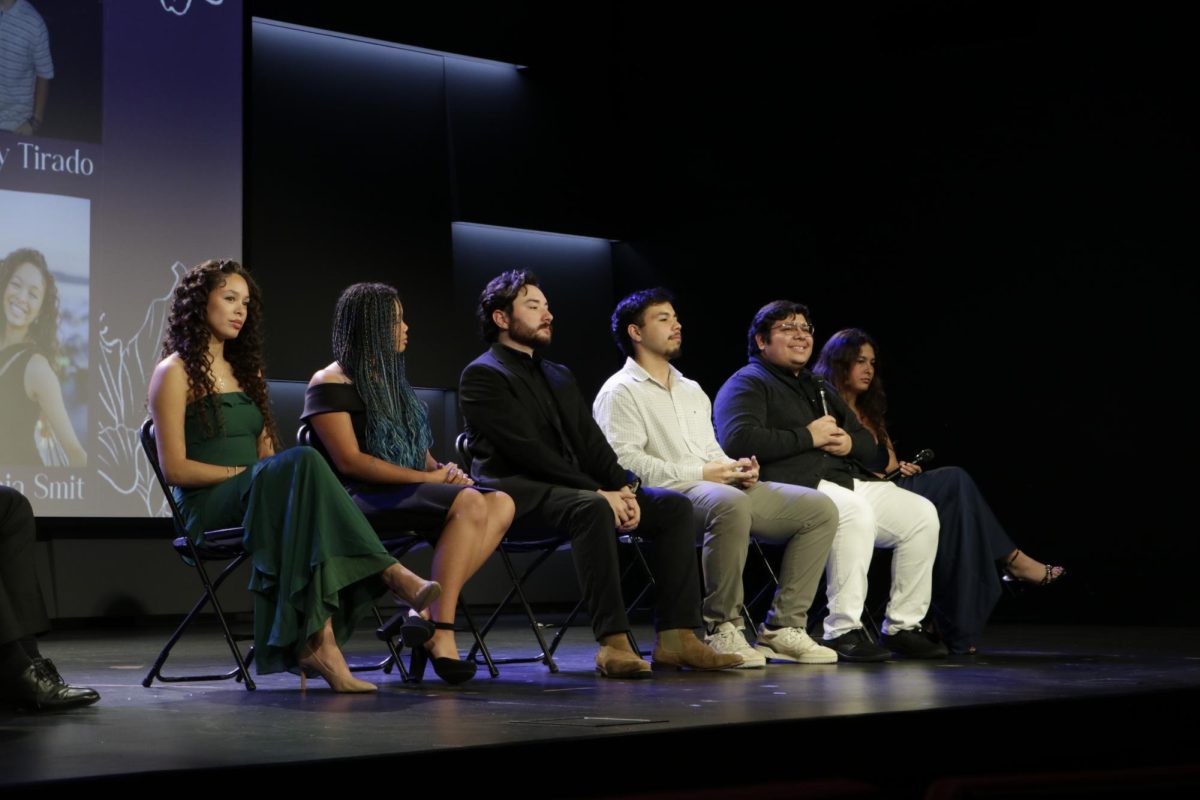
On Friday, Feb. 20th, Biola students premiered a new documentary entitled “Rooted”, a short film following the journeys of six different first-generation college students at Biola. The film draws its title from Jeremiah 17:7-8, comparing the experiences of first-gen students to the tree planted by water, not fearing heat or drought because it is rooted in the stream. The 12 minute short film highlights the unique experiences of first-gen students at Biola.
The film was headed by Gabrielle Cruz, junior Sociology major, and Christian Sanchez, sophomore Kinesiology major, both of whom were the executive producers of Rooted and are first-generation students themselves.
“It’s a short film highlighting a journey of six individuals who are first generation students — meaning they’re the first in the family to go to college — and they’re sharing their challenges, their ups and downs, and their experiences on Biola campus, and the friendships they’ve made here and sharing about like their mentors, their family, whoever has shaped them and encouraged them in setting foot on the college campus,” said Cruz.
The film was inspired by a mini series called “First-Gen Voices,” recorded on the Biola first-gen instagram page, which sought to bring awareness to first-gen students on campus. The documentary acts as an extension and continuation of that original series.
“People wanted to hear more, and we wanted to raise more awareness about what first gen is on campus and how our initiative is important … So this is kind of like an extended version of those mini series that we had,” explained Cruz.
The two explained that their goal with this project was to build a sense of community for first-gen students. Despite looking different or coming from different backgrounds, many first-gen students share similar experiences. They wanted students to recognize they’re not alone in what they may be going through, and they have a community and support system they can lean on.
They also wanted students to recognize that many individuals fall into the category of being a first-gen student. They did this by documenting a mix of men and women at Biola, all from different majors and ethnic backgrounds.
“We also tried to broaden the scope of major and like, guy and girl, that way it’s not just okay, these are all people from the same age, or all girls are all guys. That way we could communicate to more people of different races and ethnicities,” said Sanchez.
“It’s many demographics that are part of first-gen. It’s not just Hispanics. It’s not just like a certain race, it’s a wide scope,” added Cruz.
Additionally, Cruz and Sanchez aimed to elevate the voices of first-gen students at Biola.
“I really wanted to raise our voices, because when people think of first generation students, they think of us being so lowly, and I wanted to take the negative perspective and turn it into a positive one,” said Cruz.
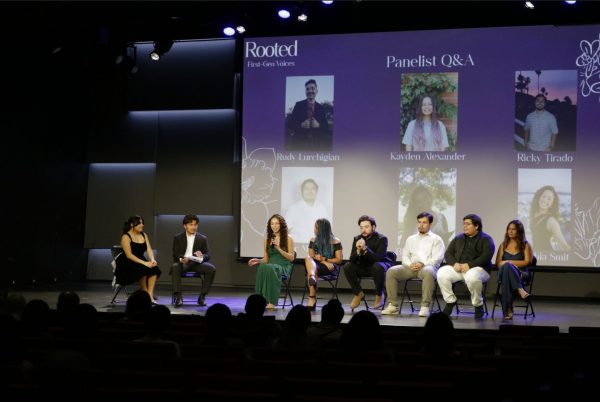
Cruz explained that this elevation of first-gen voices is especially important at this time, as much of the funding for first-gen programs has been lost due to recent legislation by the federal government revoking diversity, equity, and inclusion (DEI) initiatives. Both she and Sanchez wanted to remind Biola of the importance of first-gen initiates, ensuring that the voices of first-gen students were heard and will continue to be heard.
They were encouraged in this endeavor when they received support from California Senator Bob Archuleta and his District Representative Daniel Andalon. While the two men could not attend the screening event due to campaigning, they still provided external support throughout the documentary process. They also recognized the students involved in the film, giving them certificates for their advocacy in uplifting the first-gen community.
In the long term, Cruz and Sanchez hope that this documentary will serve to further push for first-gen representation and to build the first-gen community.
“We hope that this kind of starts to slowly, not only bring people to be more aware of the first generation program and our first generation students, but also kind of this project is like a bit of a motivation to push further now,” said Sanchez. “We hope that [this will] lead to another or another thing or another thing, and so growing and maybe just making this a big, happy family.”
REACTIONS OF FIRST-GENERATION STUDENTS
Some of the first-gen students involved in the documentary gave their thoughts on the final outcome of it.
Sophia Smit, sophomore Cinema and Media Arts major, explained that the film is named after Jeremiah 17:7-8, saying “The film is like symbolic, in a way, to how we are experiencing heat in our life, and we’re experiencing drought, and we’re bearing fruit by even being at Biola and by, like, getting through it and graduating and being successful in our majors and being artists and design majors and filmmakers, you know, like it was a really cool opportunity for us to all show our fruit with the Biola community.”
Ricardo Tirado, senior Art major, agreed with Smit, saying that he would describe the film as “testimonies about how God is faithful no matter what, because we all have different stories, yet God still remained faithful, and He got us to a place that our ancestors never got us to, or never got to.”
Like Cruz and Sanchez, the students involved in the documentary agreed that the film brings necessary attention to first-gen students. First-gen students face unique challenges and other experiences that are easily overlooked by the general Biola community.
They emphasized the importance of the first-gen community and the resources that are offered to them.
They also explained that the film challenges common assumptions about first-gen students. Some of the assumptions that the students noted include ideas such as “first-gen students don’t graduate,” “first-gen students don’t understand the intensity of college,” “first-gen students don’t have enough funds to make it through,” “first-gen students all had terrible childhood experiences,” and more. While this may describe some first-gen students, the majority are very successful at what they do and are motivated and committed to seeing their degrees through to the end.
However, the students added that many first-gen students do struggle from a lack of guidance, as they cannot rely on their parents to help them in the same way other students can.
“I feel like a common assumption is that first-gen students often just get special treatment, just because their parents didn’t go to college, or because they’re the first in their family to go to college. Well, in reality, it’s not exactly special treatment, but it’s more of a necessity just because we don’t know anything coming in. We’re all coming in blind, unlike our peers,” said Isaac Mancilla, senior Illustration Design major. “We’re not helpless, like we could do it on our own. But the help makes it a lot easier than any normal college student would have had.”
The students noted that the film was only a snapshot into the lives of first-gen students though, and they recommend others to connect with the community directly if they want a fuller picture of what it is to be first-gen.
“Just talk to somebody, ask them questions, personal questions, questions about their experience, all of that. I think it’s very important to get to know people, and I think it just shows a love for them, because you’re interested in their background and their story, and it creates a connection with them. I think it’s Christ-like,” said Tirado.
The students stated that they hope the documentary increases awareness about minority student voices on campus and hopefully inspires more of them to be amplified in the future. They also hope that the film will encourage more students to learn about the resources available to them, whether first-gen or not, and that the film will inspire all students to reflect upon what God has done in their lives and to continue trusting in Him.
The students ended with two encouragements for their fellow first-gen students. First, in spite of the difficulties that many have faced, Tirado advised his fellow first-gen students to not dwell on their hardships.
“Do not victimize yourselves. I think a lot, especially on TikTok and all this, like social media, our culture tries to praise, like, victimizing yourself … It’s not to like, disregard what you went through, but it’s like, you’ve got to move past that. Yes, it’s part of your story. It’s part of the testimony. But don’t dwell on it. Don’t stay there. Otherwise you’re gonna be sick. You’re gonna be there forever, till the day you die, and God doesn’t want that for you,” he said. “There’s more than this hurt. There’s more than this past. There’s more to this. Because God is a God of like, making, renewing, healing, all this stuff. “
The students then urged all of their fellow students to remain rooted in the word.
“If we’re not rooted in Him, we won’t be fruitful, we won’t be prosperous, our lives won’t amount to anything,” said Mancilla. “We have to root ourselves in Him because He’s our caregiver, He’s our provider; He has made everything possible for us.”