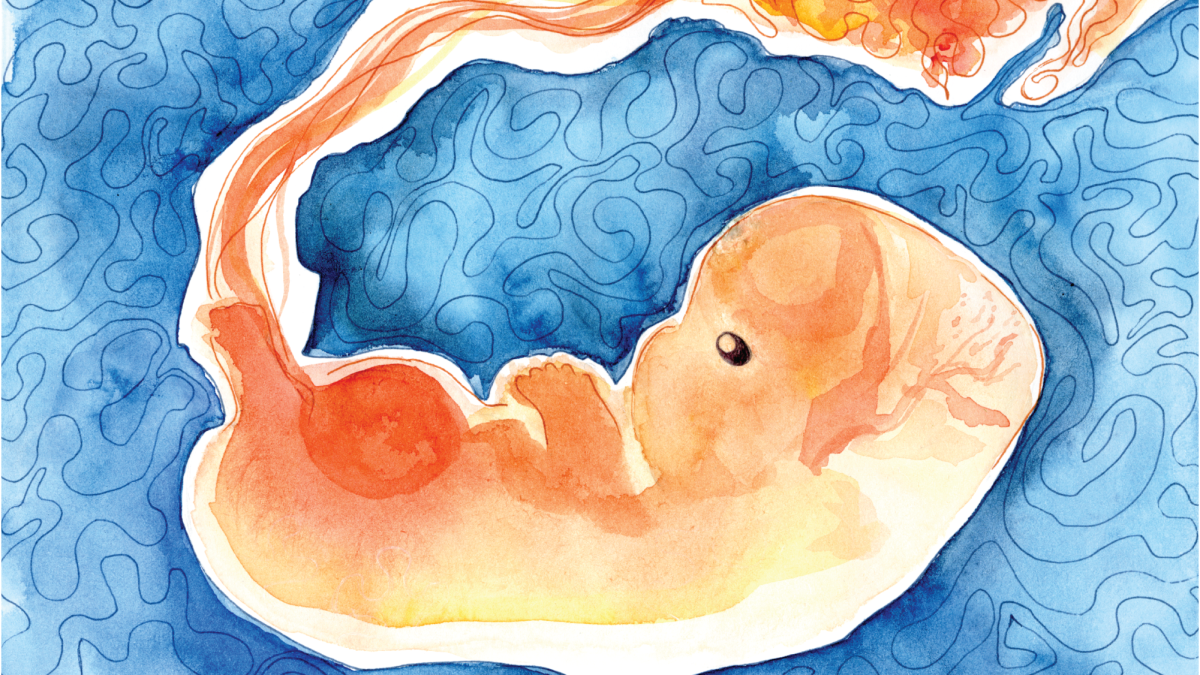
One of the most sensitive political and moral issues of our society is abortion. Within our nation, there has been steady disagreement between the pro-life and pro-choice movements over topics of bodily autonomy, when life begins, foster care, domestic violence, the list goes on. And for the most part, it is evident that Christians tend to side with the pro-life movement. However, after decades of regurgitating the same arguments and engaging in unproductive discourse with the pro-choice movement, how can we alter our approach to the abortion dilemma without compromising our stance on the sanctity of life?
ABORTION DISCOURSE ON BIOLA’S CAMPUS
On Jan. 20, Biola held their weekly Afterdark chapel where they brought to the stage Associate Professor of Theology, Dr. Thaddeus Williams, to present “The Gospel Versus Abortion.”
“I have known and wept with many who have been chewed up, spit out, and exploited by the abortion industry,” said Dr. Williams, “God pressed on my heart to speak out on this because he commands (not suggests) that we care for “the least of these.”
In his talk, he emphasized that Christians are called to care for those who are deemed as lesser or insignificant, namely, the unborn. But this is something that nearly every Christian is aware of and many uphold. I want to implore these individuals to consider that the ways we have been caring for “the least of these” is lacking, and there is a different approach—a better approach—that we can take.
THE REALITY OF ABORTION
To highlight the weight and prevalence of the abortion dilemma, Dr. Williams presented the statistics of abortion—those of which are all too often unspoken.
“The leading cause of death of human beings last year, 2025, by a long shot, was abortion to the tune of 73 million image bearers of God,” said Dr. Williams, “To help you wrap your head around that number, that would be like a dozen Holocaust happening just last year. Every second I speak, there’s two victims of the holocaust of abortion every second two more, and they’re all sacrificed on the altar of choice.”
The number of casualties abortion has produced is evocative of other genocides such as the Holocaust; however, the abortion crisis in our country is vastly more nuanced than genocides that have occurred in history. We cannot conflate the way Nazis terminated millions of people to the way women have terminated millions of babies.
There are diverse, and oftentimes, strenuous circumstances women undergo when either contemplating or having an abortion. The perception that most women have abortions out of a mere disinterest in being a mother, or out of sheer carelessness, is inaccurate and likely the result of a skewed perspective.
In a survey conducted by BMC Women’s Health, 954 women were asked why they sought an abortion. Out of this group, only 4% reported their reason as being they did not want a baby. The rest attributed it to insufficient finances, unemployment, abusive or unsupportive partners, and an insufficient capacity to parent another child, among others. It is also worth acknowledging that more than half of women who do end up having an abortion were coerced or heavily encouraged to do so. That is, 64% report being pressured into having an abortion and 79% claimed that available resources were not made known to them.
To fully grasp the level of nuance this issue contains, it is important to recognize the complexity that comes with women giving up their babies for adoption. This issue is particularly relevant to women who seek abortions due to abusive, neglectful, or unsupportive partners. When a woman is in an abusive (or otherwise unfortunate relationship) she is faced with various obstacles that might deter her from resorting to adoption. For example, if the unborn child’s father gains parental rights, he has the ability to object to the adoption process or sue the mother in the process. The only way for the mother to defuse this issue is for her to prove that she is experiencing domestic violence, which can be extremely difficult, especially for cases where the abuse is emotional or verbal.
While these factors by no means justify abortion, they are things that the pro-life movement needs to recognize. By investing ourselves in understanding why women seek abortion, we can better equip ourselves with the means to assist women through their pregnancies, and protect the lives of both mothers and children.
A COMMON GOAL
I think a common reason why the pro-life movement is hesitant to shift their attention to supporting women is because that is something often attributed to the pro-choice movement. But advocacy for women does not have to strictly be a pro-choice stance. We can advocate for women in ways other than their choice to have an abortion, and I believe that is a notion that both sides can come to agree on.
Instead of choosing between the strict advocacy for the unborn or the strict advocacy for mothers, the two movements should recognize how we can advocate for both. I think the first step we can take to reaching this consensus is realizing our own shortcomings.
For pro-lifers like myself, this looks like recognizing that we have been mistakenly ignorant of the truth behind women seeking abortions. In our valiant efforts to protect the unborn, we have often forgotten to acknowledge that the majority of women who seek abortions are disadvantaged and misinformed. We must begin to consider these women as a part of “the least of these” that we are commanded to care for.
For those who consider themselves pro-choice, I want to emphasize how pro-lifers, particularly Christians, truly strive to cultivate life from womb to tomb. Please realize that this is not just an idea we express, but is something we live out as reflected in a study by CAFO on Christians being the most prominent demographic in foster care and adoption systems.
“Our Christian brothers and sisters double the national average of adopting unwanted kids,” said Dr. Williams in his chapel message, “and we triple the national average when it comes to caring for kids in the foster care system.”
It is inappropriate to claim that Christian pro-lifers only care about life in the womb, and not about those already born. Reflected in many studies, Christians are reported to be outstanding in their cultivation of life, from the moment of conception to the moment of death.
I think that this desire to help disadvantaged children is founded on the goal of providing everyone the quality of life that they deserve. And that goal is one that is shared between the pro-choice and pro-life movements. I would encourage members of both movements to consider that we can aid the life of the mother or baby without having to compromise the quality of life for the other.
WHAT CAN BIOLA DO NEXT?
Between the statistics of unborn children killed, the reality of women seeking abortions, and the rocky path to finding a common goal between the pro-life and pro-choice movements, we as Biolans need to ask ourselves: how do we ensure that we are regarding the biblically founded sanctity of life to the fullest?
For starters, we can begin by garnering greater empathy for women who are seeking abortions or have previously had them. This is something I personally wish Dr. Williams took into stronger consideration in his message. While it is true that countless unborn children have been murdered due to the choices of women, we must acknowledge that we—as outsiders to these women’s lives—don’t know their true circumstances.
As mentioned before, these women could be facing financial hardship, domestic violence, or more. We must stop villainizing women for getting abortions, especially since men bear similar responsibility. By approaching these women about their pregnancies with greater sensitivity, we foster a safer, more welcoming space for them to come to with their issues. In doing so, we can more effectively talk with these women about their circumstances, connect them to the best possible resources, and ultimately help them choose life for their children. During this process, we can look to Jesus and the example he set. Jesus didn’t confront people with hostility or accusations, but instead met people where they were, talked to them with gentleness and compassion, and guided them to hope and true life.
In actually providing mothers resources, there is much that needs to be done. While it is wonderful that the Christian demographic shines in its philanthropy and prominence in the adoption/foster care systems—there is more, and arguably better, action that we can take. As higher education students pursuing careers in all aspects of society (education, social work, law, health care, and more) we can work to decrease abortion rates through more organic methods. We can strive for better sex education, welfare programs, and sexual assault and domestic violence protection.
One final action that we must take, is ensuring that women who have had abortions (or even men who have influenced the decision), are made aware of the radical healing and redemption that is possible through Christ (Eph. 1:7-8).
As Dr. Williams put it, “Be there as a source of Gospel grace to anyone you know who has been impacted by abortion, because at the end of the day, the good news of Jesus is the ultimate and only solution to the abortion problem.”